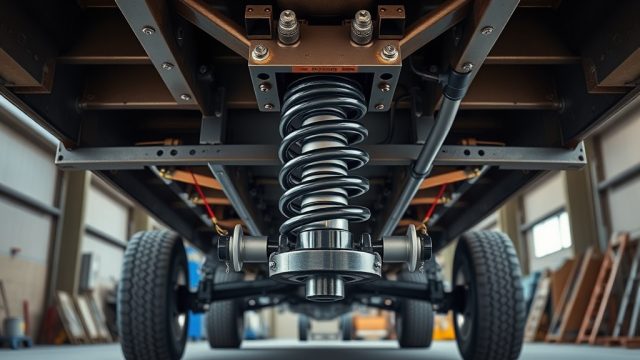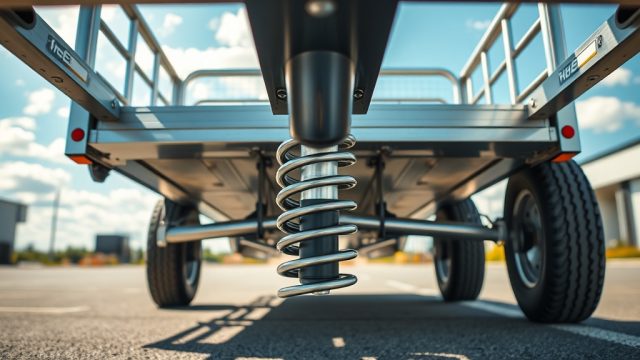
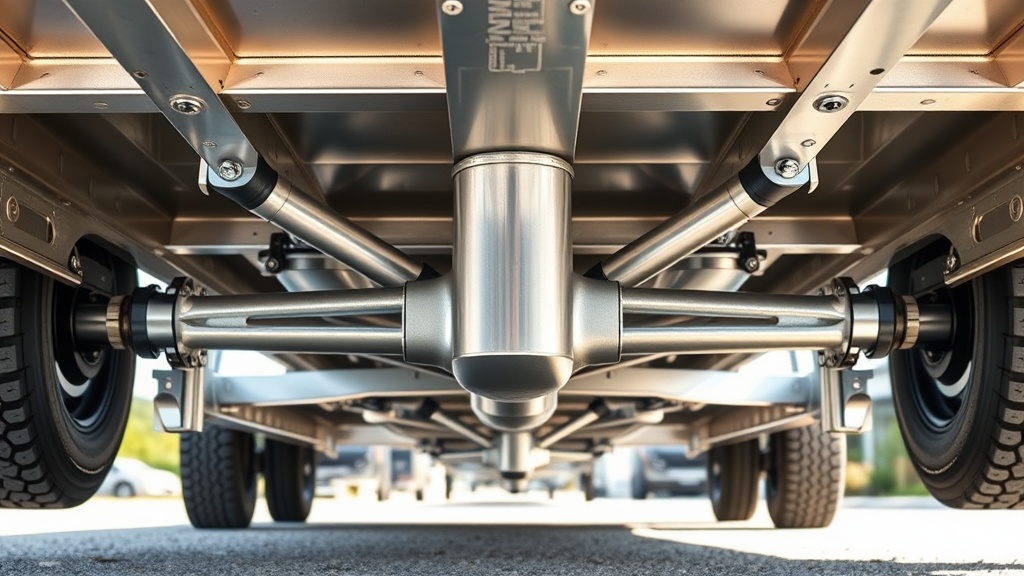
Introduction: Understanding the Real Load Limits of the Timbren HD3500SL
When you’re hauling a heavy trailer, the Timbren HD3500SL axle-less suspension system is often praised for its smooth ride and maintenance-free design, but a persistent problem is the misunderstanding about its true axle capacity. Many owners mistakenly believe the “3500” in the name directly dictates a 3,500-lb axle rating, which can lead to dangerous under-rating or overloading. In this article, we’ll break down the weight ratings, explain how load distribution works with this unique suspension, and give you a correct guide to matching it with your trailer’s GVWR.
Does “HD3500SL” Mean the Axle Is Rated at 3,500 lbs?
No—and this is the number one misconception. The “3500” in Timbren HD3500SL refers to the suspension system’s gross axle weight rating (GAWR) capacity when properly paired with compatible axle components, but it’s not a standalone axle rating. The system is designed for a maximum GAWR of 3,500 lbs per axle, but this assumes the axle tube, spindles, and bearings are also rated for that weight. In practice, many trailer manufacturers use the HD3500SL with axles rated at only 3,000 lbs due to cost-cutting or design constraints. Always check the axle tag, not the suspension name.
What Are the Actual GAWR and GVWR Limits for the Timbren HD3500SL?
The Timbren HD3500SL suspension itself can handle a maximum static load of 3,500 lbs per side (7,000 lbs total for a dual-axle setup), but the entire axle assembly’s GAWR is typically stamped at 3,500 lbs. However, the GVWR (gross vehicle weight rating) of your trailer depends on the frame, tires, and hitch. For a single-axle trailer, the HD3500SL should not exceed a GVWR of 3,500 lbs, with a tongue weight limit of 350–525 lbs (10–15% of GVWR). Here’s a quick breakdown table for common configurations:
| Configuration | Max GAWR (per axle) | Max GVWR (trailer) | Recommended Tongue Weight |
|---|---|---|---|
| Single-axle, 3,500-lb axle | 3,500 lbs | 3,500 lbs | 350–525 lbs |
| Dual-axle (two HD3500SL units) | 3,500 lbs each | 7,000 lbs | 700–1,050 lbs |
| Single-axle with 3,000-lb axle | 3,000 lbs limited by axle | 3,000 lbs | 300–450 lbs |
Caution: Do not assume the suspension alone gives you 3,500 lbs GAWR. Verify the axle’s stamp. Many 3,500-lb axles are actually rated at only 3,000 for the spindle area.
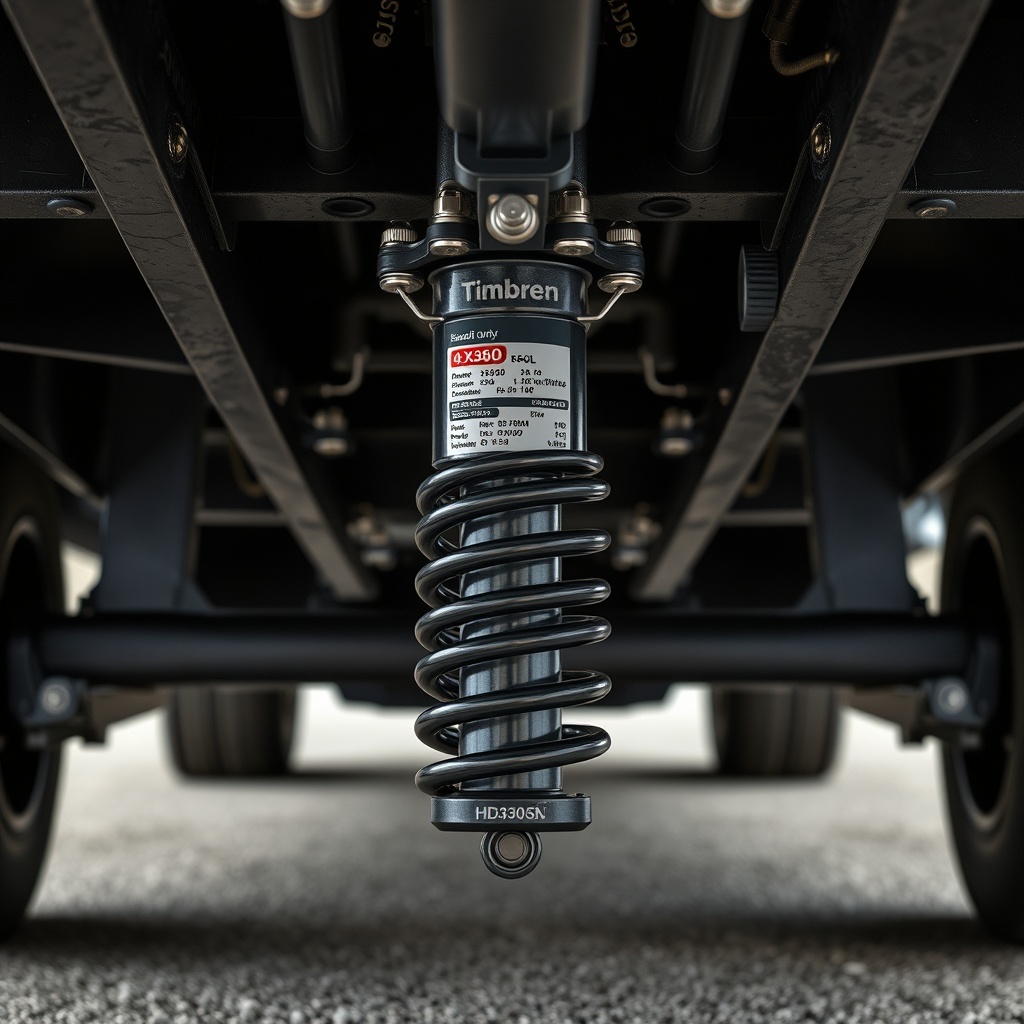
How Does the HD3500SL Affect Axle Capacity Compared to Leaf Springs?
The Timbren HD3500SL uses a rubber torsion system that distributes load differently than traditional leaf springs. Unlike leaf springs, which can sag or break under overload, the HD3500SL is designed to have a progressive spring rate. At lighter loads (under 1,500 lbs), the ride is soft, but as load increases, the rubber elements compress and stiffen, supporting up to 3,500 lbs without bottoming out. This means the suspension itself rarely fails due to overloading, but the axle tube and bearings become the weak link. When upgrading from leaf springs, you must ensure the axle is rated for the intended GAWR—many trailers with 2,500-lb leaf springs are repurposed with HD3500SL but only have 2,500-lb axles. For more details on matching components, read our Timbren HD3500SL: Weight Ratings & Load Analysis for Trailer Stability.
What Happens If You Overload the Timbren HD3500SL?
Overloading beyond the GAWR can lead to catastrophic failure—but not always in the suspension itself. The rubber torsion units can handle roughly 4,000 lbs static before damage, but the axle bearings and spindles will fail first. Signs of overload include excessive sidewall flex on tires, uneven tire wear, and a noticeable squat of the trailer. If you exceed the 3,500-lb GAWR by 10–20%, the rubber elements may compress to a solid state, causing a harsh ride and potential detachment of the suspension bracket. For a complete checklist on safe towing limits, reference our Timbren HD3500SL: Safety Compliance & Towing Standards Checklist.
How to Verify the Correct Load Rating for Your Specific Trailer?
To avoid loading errors, follow this step-by-step method:
- Step 1: Locate the axle’s VIN or stamp—usually on the axle beam near the hub. It will read something like “GAWR 3000 lbs” or “3500 lbs.”
- Step 2: Check the tire sidewall for load range (e.g., LR-D, LR-E). For a 3,500-lb axle, you need at least LR-D tires rated for 2,540 lbs each (single tire per side).
- Step 3: Calculate the tongue weight: it should be 10–15% of the loaded trailer weight. If your trailer has a GVWR of 7,000 lbs, tongue weight should be between 700–1,050 lbs.
- Step 4: Weigh the trailer at a public scale with a full load to confirm you’re under the GAWR. If the scale shows the axle is at 3,600 lbs, you’re overloaded even if the suspension feels fine.
Need to upgrade your brake controller to handle the increased load? See our Timbren HD3500SL: Brake Controller Compatibility & Setup Guide for load-sensing options.
What Owners Say: Real-World Load Experiences
Users on forums report that the HD3500SL often exceeds expectations for ride quality but reveals hidden vulnerabilities in other components. One owner on a heavy-equipment forum shared, “I thought I could run a 3,500-lb GVWR trailer with the HD3500SL, but my axle was stamped at 3,000 lbs—I cooked the bearings after one season. After upgrading to a 3,500-lb axle and bearings, everything worked perfectly.” Another owner hauling a 6,500-lb dual-axle setup said, “The suspension is smooth at 3,000 lbs per axle, but at 3,500 lbs it gets stiff—still safe, but I wouldn’t push it past 3,300 lbs per side for daily use.” A third owner noted, “The rubber torsion units didn’t break, but the U-bolts started to loosen. I had to retorque them after the first 500 miles.” For a comparison of how the HD3500SL stacks up against competitors like EzFlex or Lippert, read our Timbren HD3500SL vs Competitors: Honest Comparison & Buyers Guide.
Frequently Asked Questions
Q1: Can I use Timbren HD3500SL on a trailer with a GVWR of 5,000 lbs?
Yes, if you use a dual-axle setup (two HD3500SL units), the combined GAWR is 7,000 lbs, covering a 5,000-lb GVWR easily. For single-axle, no—the max GVWR is 3,500 lbs.
Q2: What is the difference between HD3500SL and the standard Timbren 3500?
The “SL” stands for “Soft Load,” which uses a softer rubber compound for better ride comfort under lighter loads (1,000–2,500 lbs). The standard 3500 is firmer and better for constant heavy loads near 3,500 lbs.
Q3: Do I need to upgrade brakes when using the HD3500SL?
Yes, if your trailer’s GVWR exceeds 3,000 lbs, you need electric brakes on all axles. The HD3500SL is often paired with 12×2-inch brake assemblies. See our Timbren HD3500SL: Brake System Upgrade & Wiring Guide for wiring specifics.
Q4: What is the maximum tongue weight for the HD3500SL?
For a single-axle trailer at 3,500 lbs GVWR, tongue weight should be 350–525 lbs. For dual-axle at 7,000 lbs, it’s 700–1,050 lbs. Exceeding this can overload the hitch or suspension brackets.
Q5: How do I know if my axle is 3,500-lb rated?
Look for a metal tag welded to the axle beam, usually near the center. It will state the manufacturer, GAWR, and sometimes the load range. If no tag, measure the axle tube diameter—3,500-lb axles are typically 2-5/16 to 2-3/8 inches in diameter.
Q6: Can the HD3500SL be used on off-road trailers?
Yes, it’s popular for off-road use due to its independent wheel travel. However, limit the load to 3,000 lbs per axle for rough terrain to avoid rubber torsion damage from shock loads.