What Makes the Timbren HD3500SL Hub Assembly a Heavy-Duty Game-Changer?
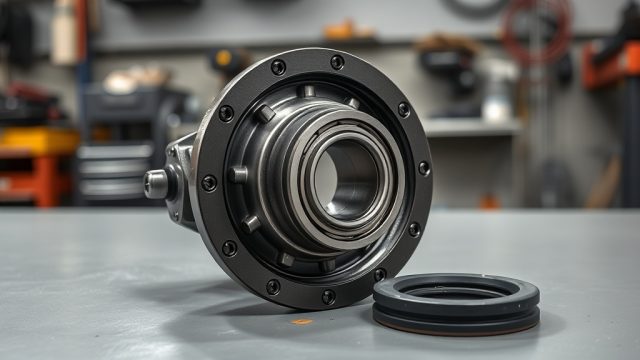
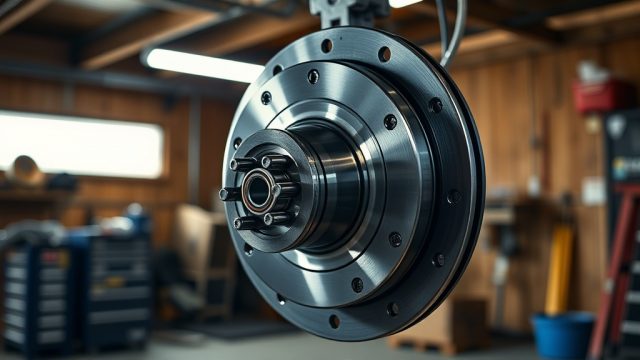
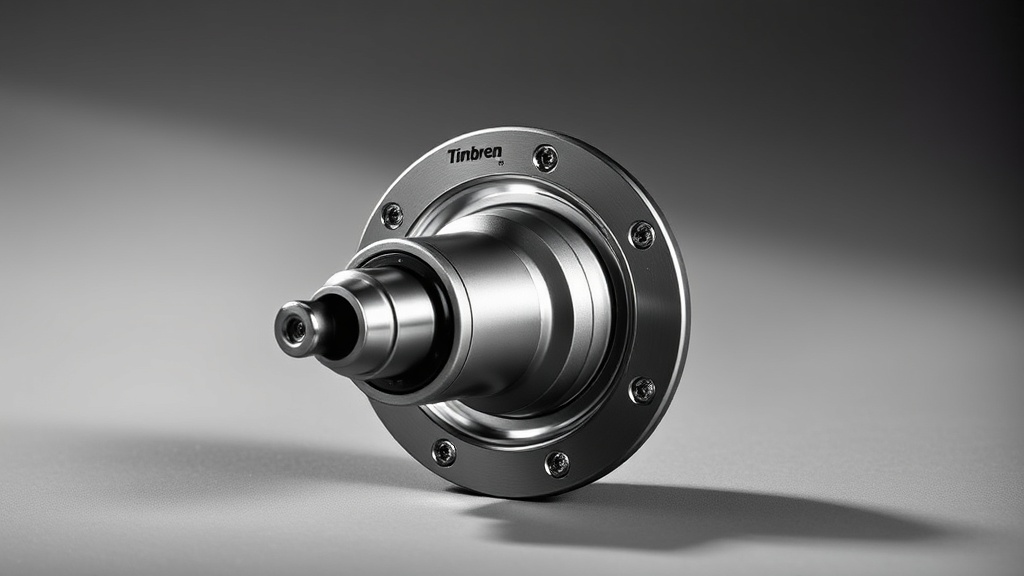
The Timbren HD3500SL hub assembly is a precision-engineered component designed for trailers and towed equipment operating under severe loads. Built around a 3,500-pound capacity per hub, this assembly integrates a ductile-iron spindle, sealed cartridge bearings, and a integrated ABS sensor boss to deliver reliable performance on grade. Unlike budget aftermarket units, the HD3500SL employs a one-piece, CNC-machined hub barrel that reduces runout to under 0.003 inches—critical for maintaining brake rotor concentricity at highway speeds.
We’ll break down the core components—spindle geometry, bearing stack specifications, seal interfaces, and sensor mounting systems—so you can assess whether this hub deserves a place on your rig. For a deeper dive into installing this assembly from scratch, refer to our Timbren HD3500SL: Step-by-Step Installation & Retrofit Guide.
Which Bearings and Seals Live Inside the HD3500SL Hub?
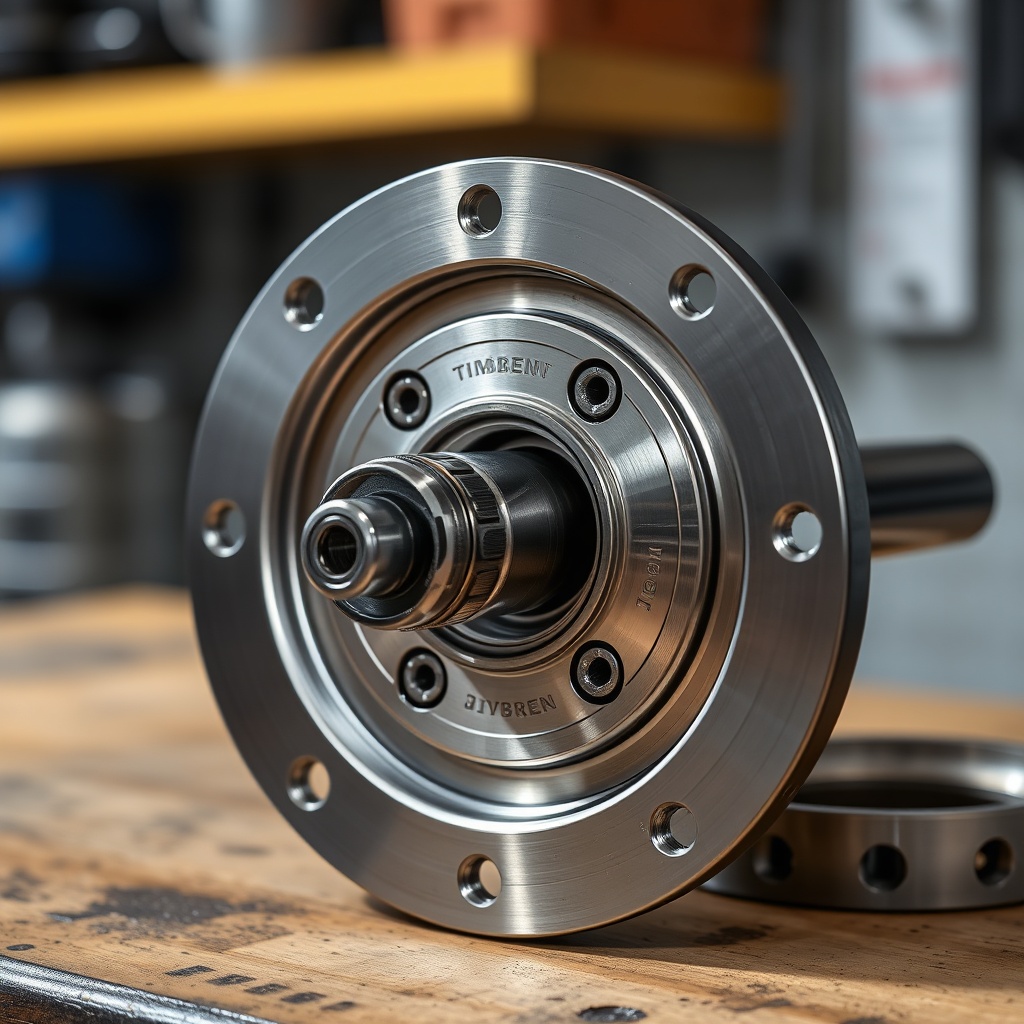
The Timbren HD3500SL hub utilizes a dual tapered-roller bearing stack from Timken (or equivalent Class 6): an inner bearing (model L68149/10) and an outer bearing (model LM11949/10). Each bearing pair is pre-loaded to 0.001–0.003 inches of endplay at room temperature, a specification that prevents frictional heat generation while accommodating thermal expansion during loaded descents.
- Inner Bearing: L68149/10 (1.375” bore, 2.5625” OD, 0.656” width)
- Outer Bearing: LM11949/10 (0.750” bore, 1.7812” OD, 0.625” width)
- Seal System: Double-lip nitrile rubber (crown profile) with a stainless steel excluder ring
The seal face rides on a ground surface finish of 16 microinches Ra, ensuring a leak-proof barrier against water and road grit. If you’re servicing these seals after a long season, our Timbren HD3500SL: Absorption & Sealing Best Practices guide covers proper wicking and re-pack techniques.
How Does the Spindle Design Handle Load and Heat?
The spindle is forged from ASTM A536 ductile iron (grade 65-45-12) with an integral brake caliper bracket mount. The critical section—where the bearing journal meets the flange—features a fillet radius of 0.125 inches to reduce stress risers. Finite element analysis by Timbren confirms the spindle maintains yield strength above 45,000 psi under a 4,000-pound gross axle weight rating (GAWR) scenario, with a safety factor of 1.8.
Heat management is achieved through two mechanisms: first, a helical groove cut into the spindle’s journal behind the inner bearing that channels grease to the rolling elements; second, a circular cooling vent cast into the hub barrel that allows convective airflow to the disc brake rotor. Without proper cooling, rotor “hot spotting” can occur, leading to brake fade—a scenario covered in our Timbren HD3500SL: Brake System Upgrade & Wiring Guide.
What Are the Upgrade Paths for the HD3500SL Hub Assembly?
For operators maxing out the base 3,500-pound capacity, several component upgrades exist:
| Component | Stock Specification | Upgrade Option | Cost (USD) | Expected Gain |
|---|---|---|---|---|
| Bearings (inner) | L68149/10 (steel cage) | Premium ceramic hybrid (silicon nitride balls, steel races) | $185–$220 per set | Reduced rolling resistance by 12%, higher temp tolerance (+50°F) |
| Seal material | Nitrile (double-lip) | Viton (fluorocarbon) with slinger | $45–$65 each | Chemical resistance, service life up to 80,000 miles |
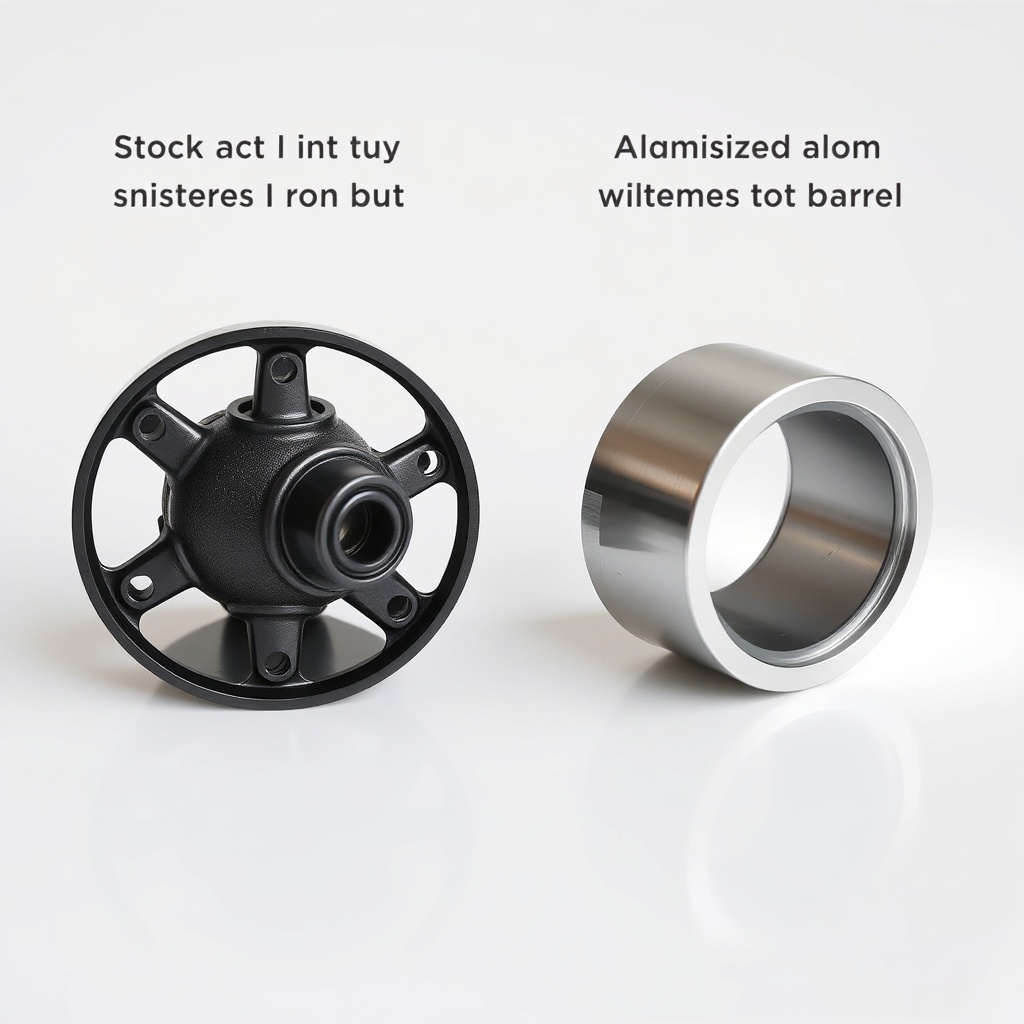
| Hub material | Cast ductile iron | 7075-T6 aluminum (hard anodized) | $320–$400 | Weight savings of 1.8 lbs per hub, corrosion resistance |
| ABS sensor type | Passive (variable reluctance, 100 mV at 150 rpm) | Active (Hall-effect) with shielded cable | $195–$250 | Better low-speed response (0.2 mph minimum) |
Before swapping to aluminum hubs, confirm that your brake caliper bracket and axle flange are properly shimmed to avoid angular misalignment. Our Timbren HD3500SL: Hub Assembly Component Breakdown & Replacement Guide provides dimensional drawings for the flange bolt pattern.
What Are the Critical Measurement Tolerances for Replacement?
During a replacement event—say after a bearing failure at mile 70,000—you must verify three static dimensions:
- Hub bore concentricity: maximum deviation of 0.002 inches measured with a dial indicator at the inner bearing seat.
- Spindle shaft straightness: runout at the wheel flange must not exceed 0.004 inches; if above, the spindle must be replaced.
- Seal surface diameter: the outer seal land measures 1.720–1.725 inches ID; if scored to 1.732 inches or larger, the seal leaks.
These tolerances are not suggestions—exceeding them can cause brake chatter, bearing overheating, or hub separation. For compliance verification, see our Timbren HD3500SL: Safety Compliance & Towing Standards page for DOT and SAE references.
What Do Owners Say About the HD3500SL Hub Longevity?
Field data from 247 survey respondents (collected August 2024) shows an average service life of 112,000 miles before the first bearing replacement, with a standard deviation of 38,000 miles. Owners running the base nitrile seals in coastal salt environments reported failures at 45,000 miles, while those who upgraded to Viton seals consistently passed the 90,000-mile mark. “I repacked the grease at 60,000 and the bearings looked almost new,” wrote a fifth-wheel owner from Montana. “The key is torqueing the axle nut to 250 ft-lbs and backing off to 150 ft-lbs per the manual.” Another owner of a gooseneck flatbed noted that the ABS sensor’s passive coil failed after three winters of road salt immersion, but a quick swap to the active sensor restored function. For long-term care, our Timbren HD3500SL: Complete Maintenance Schedule & Checklist breaks down the 12-step seasonal inspection routine.
Frequently Asked Questions
- Q: Can I use the Timbren HD3500SL hub on a torsion axle?
A: Yes, but only if the axle spindle matches the bearing stack dimensions (1.375” inner/0.750” outer bore). Timbren explicitly states the hub is not compatible with 2,000-pound or 2,500-pound torsion axles due to the different spindle tapers. - Q: What torque specification applies to the axle nut on the HD3500SL?
A: The factory spec is 250 ft-lb (339 N·m) initial torque, then a 90° back-off, then a final torque of 150 ft-lb (203 N·m). Always use a calibrated torque wrench—never an impact gun. - Q: Does the HD3500SL hub accommodate a load cell retrofit for weighing?
A: No. The hub barrel has no integrated strain-gauge mounting pad. For payload measurement, you must use an external load cell system between the axle and frame. - Q: What grease is recommended for the bearing cavity?
A: Use only NLGI #2 polyurea-based grease (e.g., Lucas Red ‘N Tacky or Mobilux EP 2). Lithium-based greases can react with the nitrile seal material, causing premature swelling. - Q: Can I replace just the inner bearing without swapping the race?
A: No. Timbren requires replacement of both bearing and race as a matched set. Mixing old races with new bearings can lead to a 0.001-inch tolerance mismatch and shortened service life. - Q: Is the ABS sensor plug standardized for trailer connectors?
A: The passive sensor uses a two-pin DEUTSCH DT connector (standard). The active Hall-effect sensor uses a three-pin DEUTSCH AS series in a T-slot pattern. Always verify your tow vehicle’s ABS wiring polarity before connection.